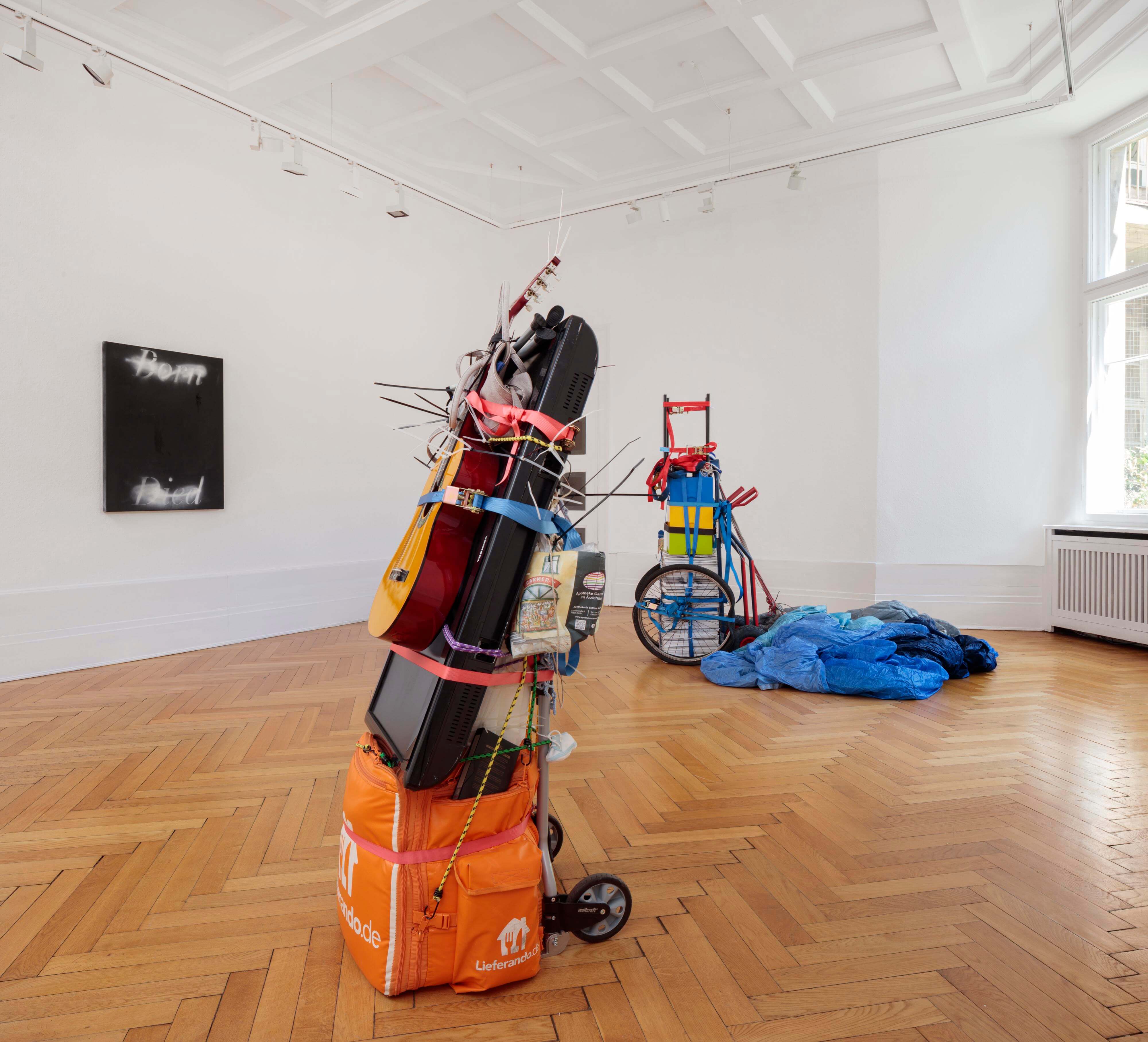





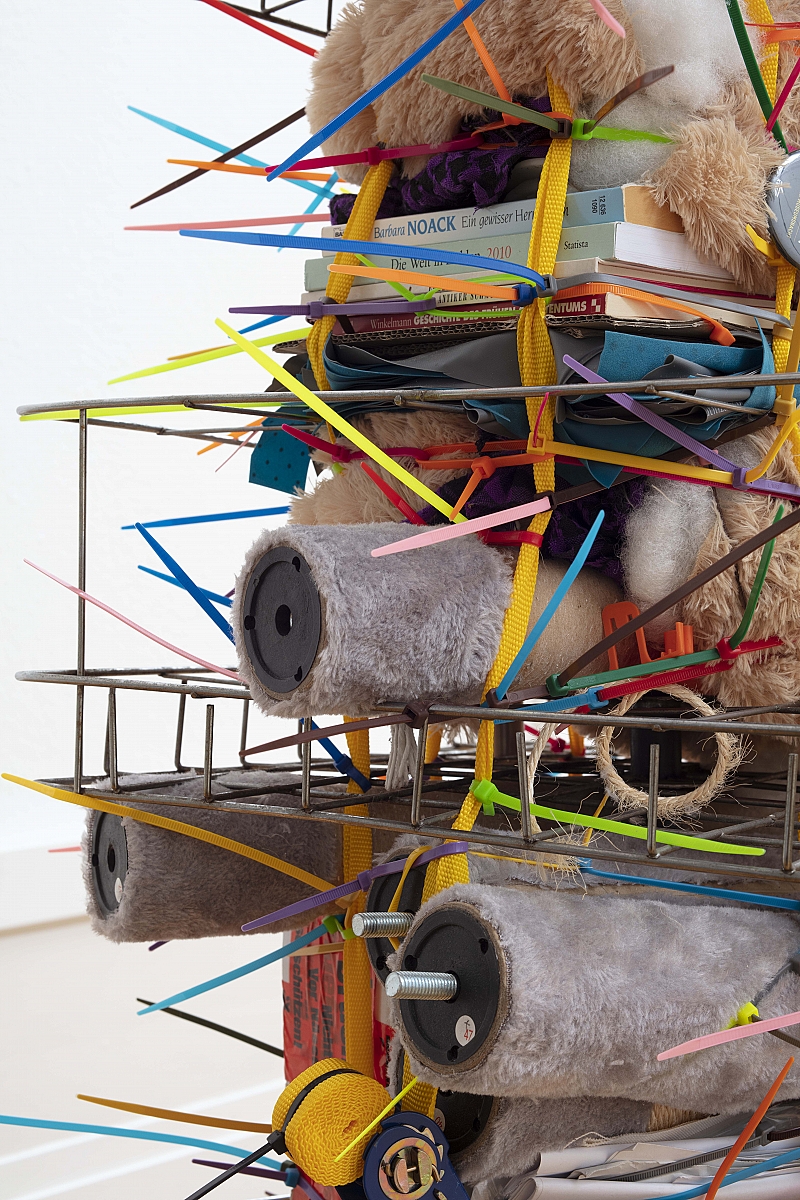
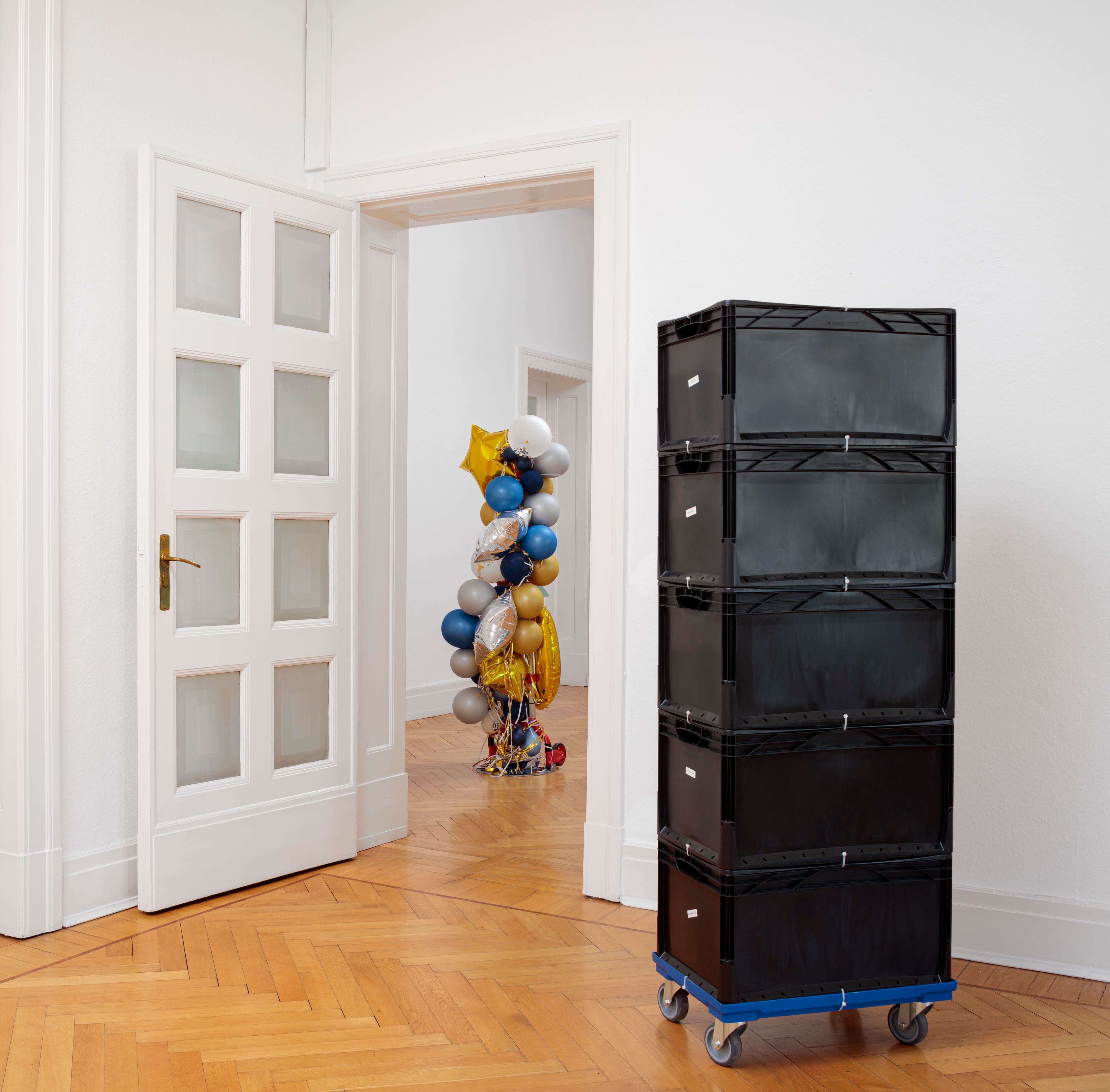
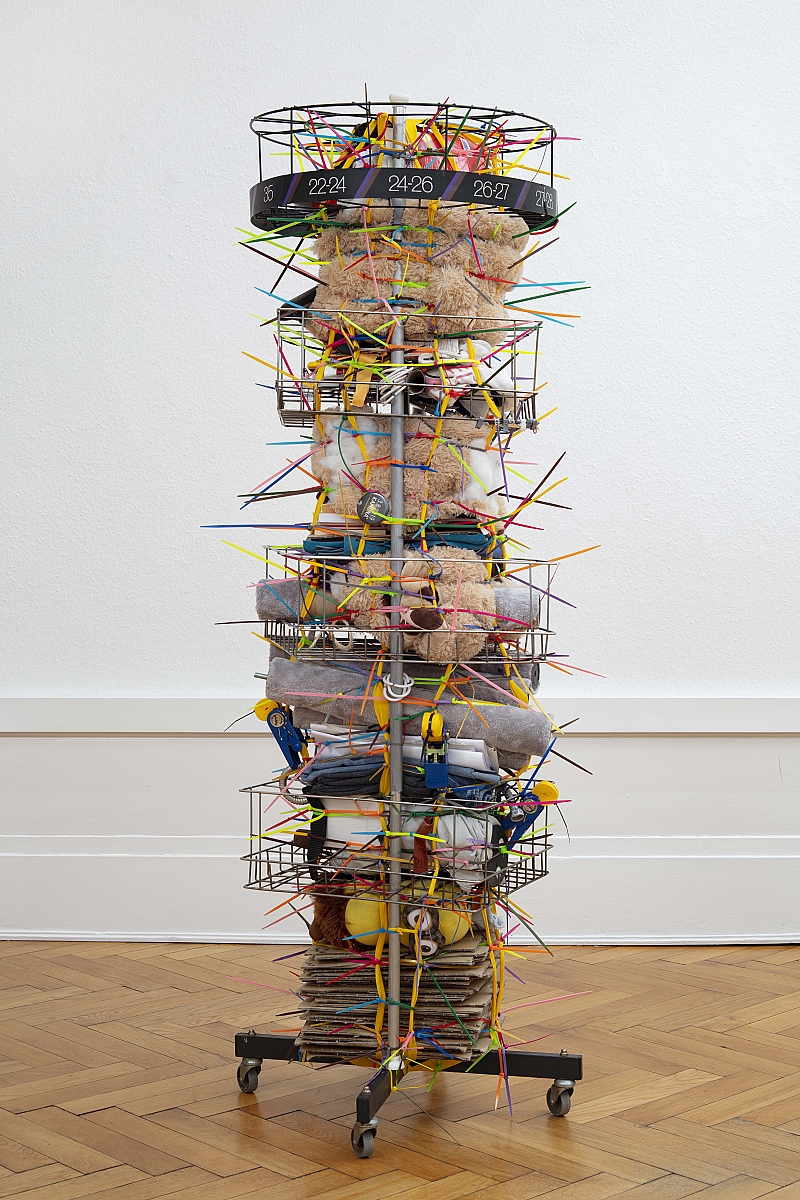
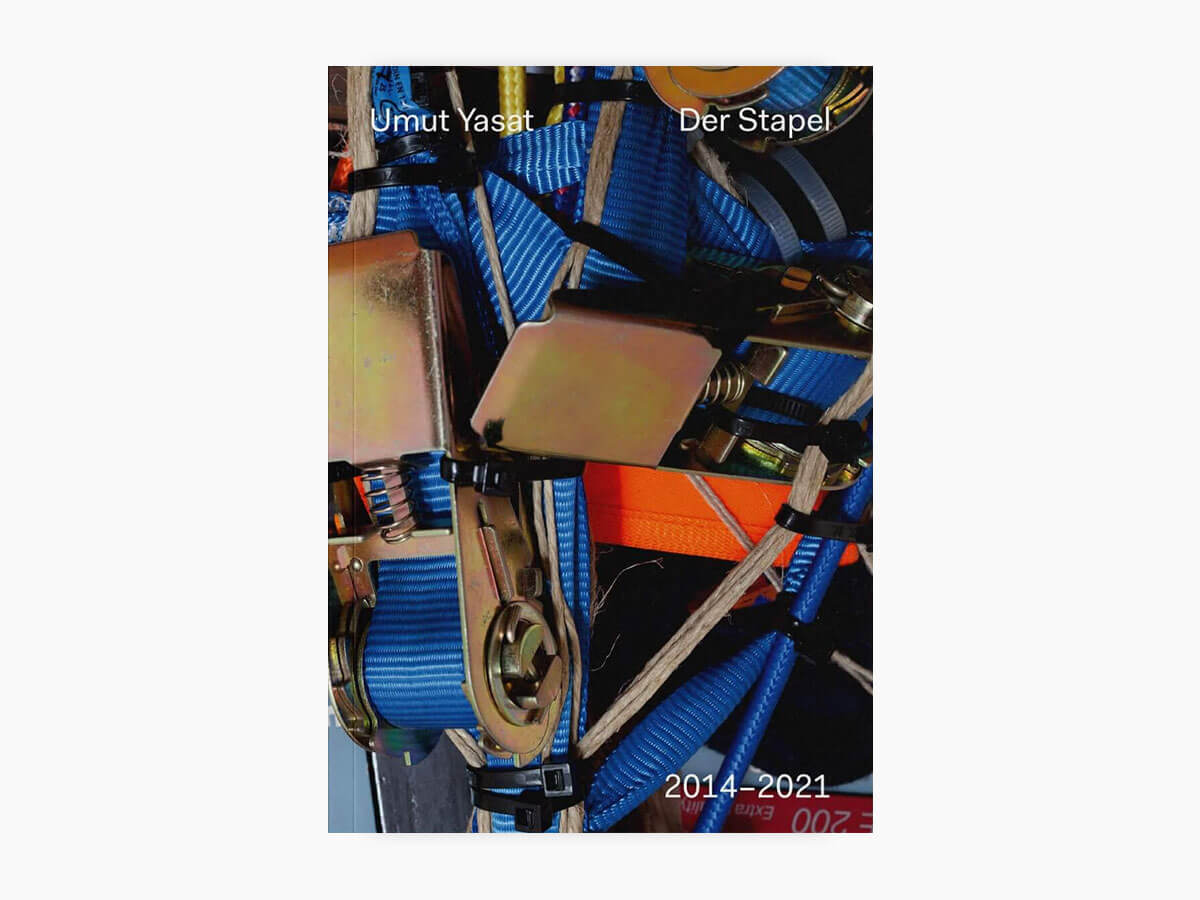

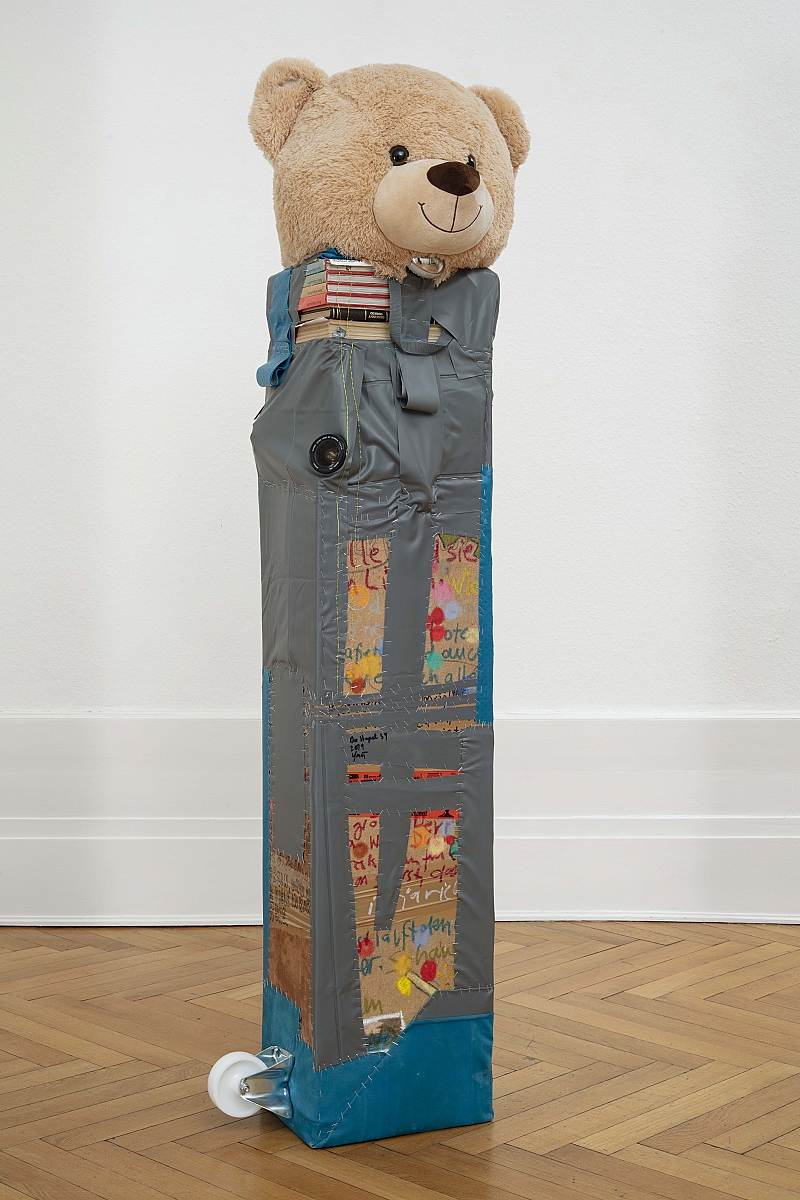
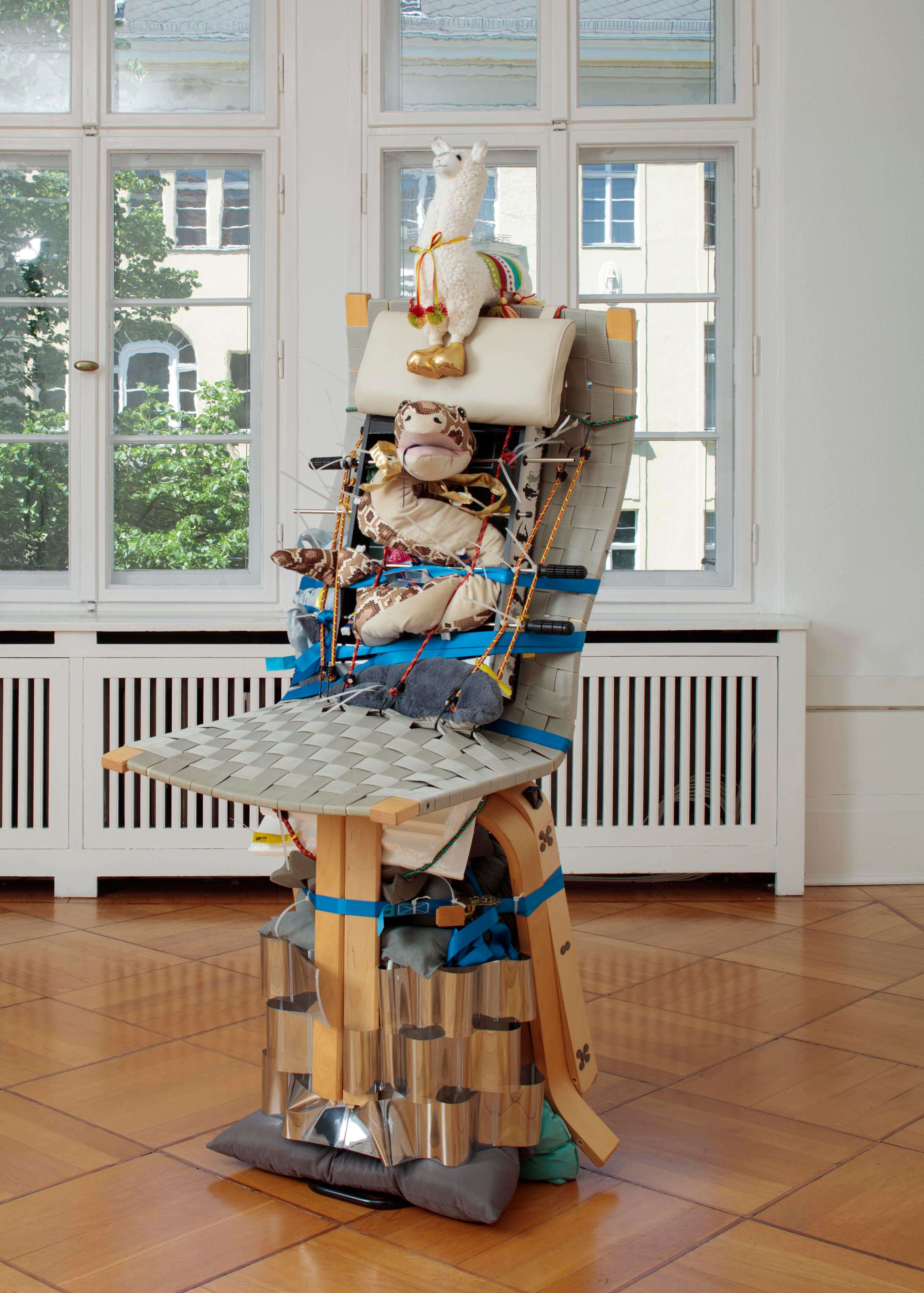
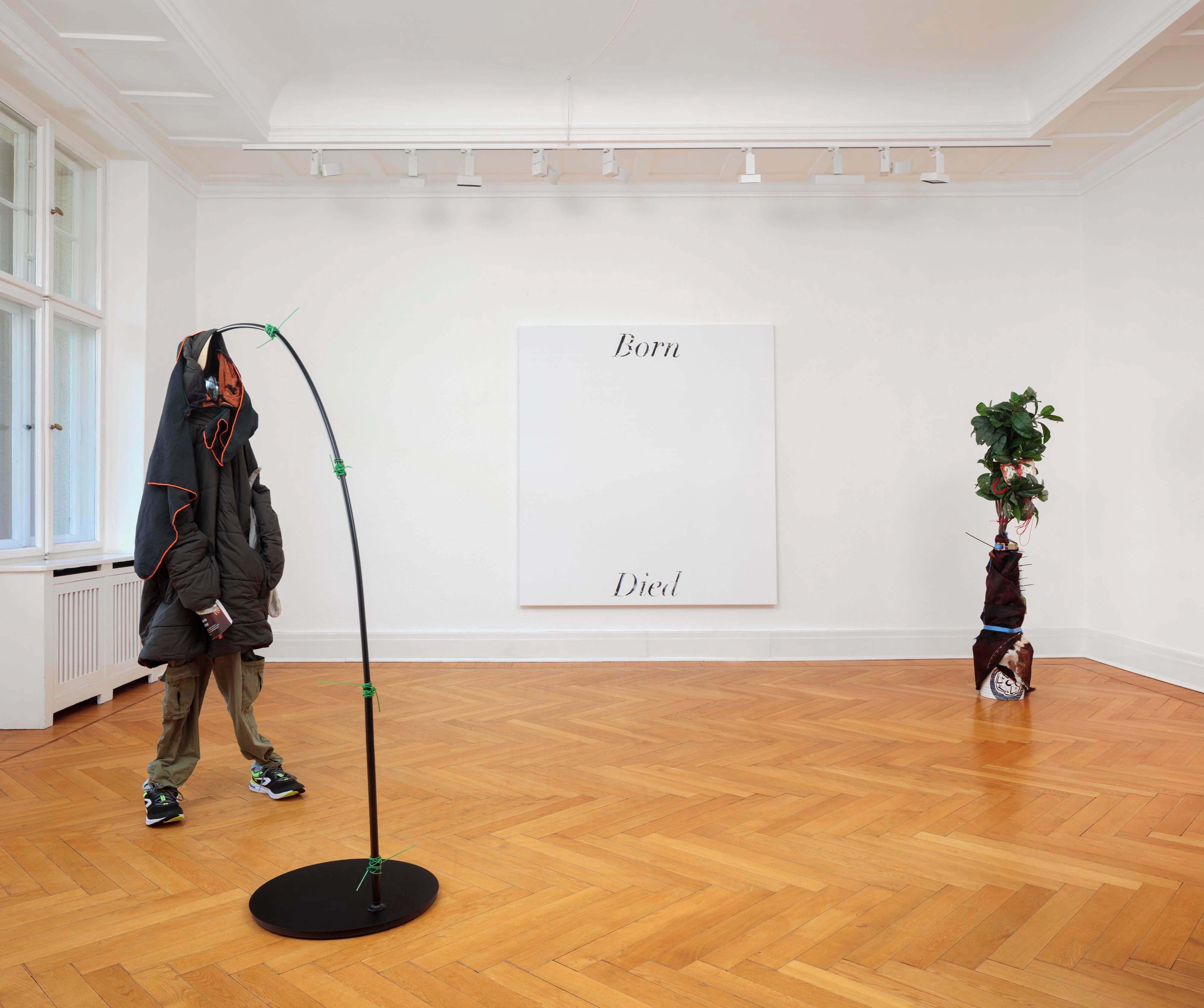
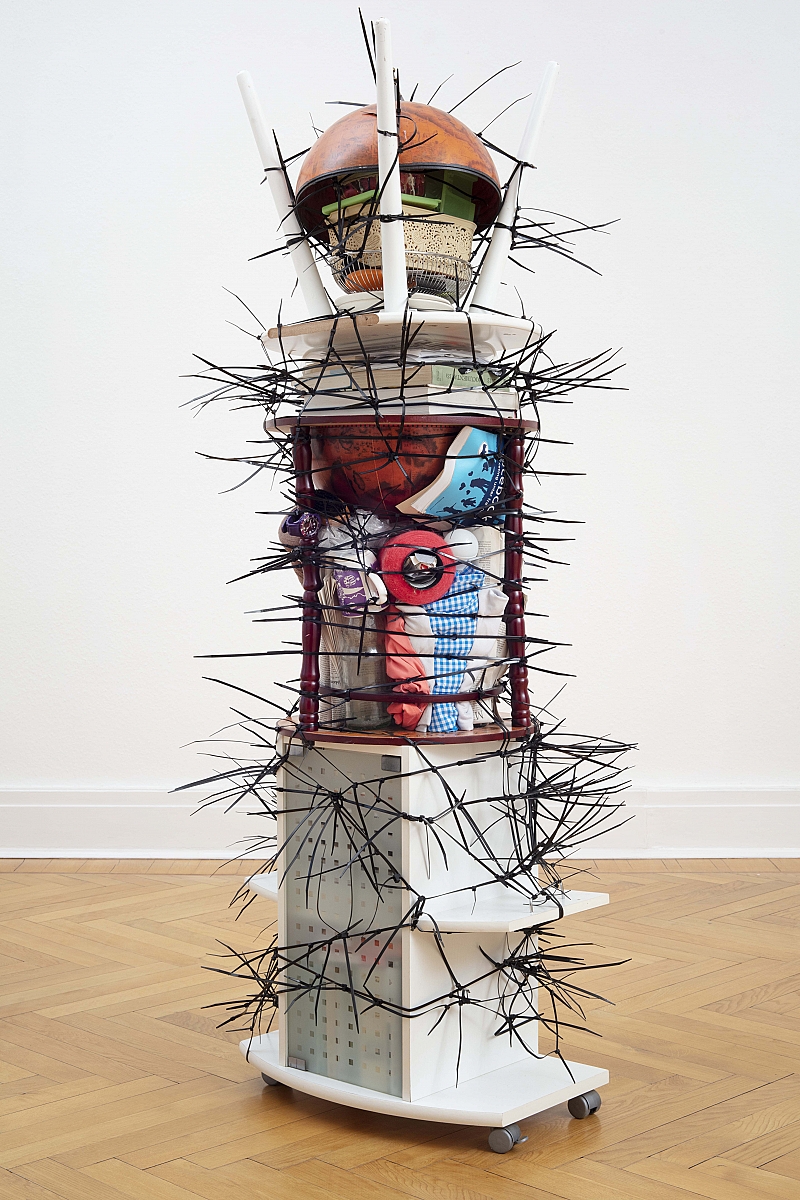
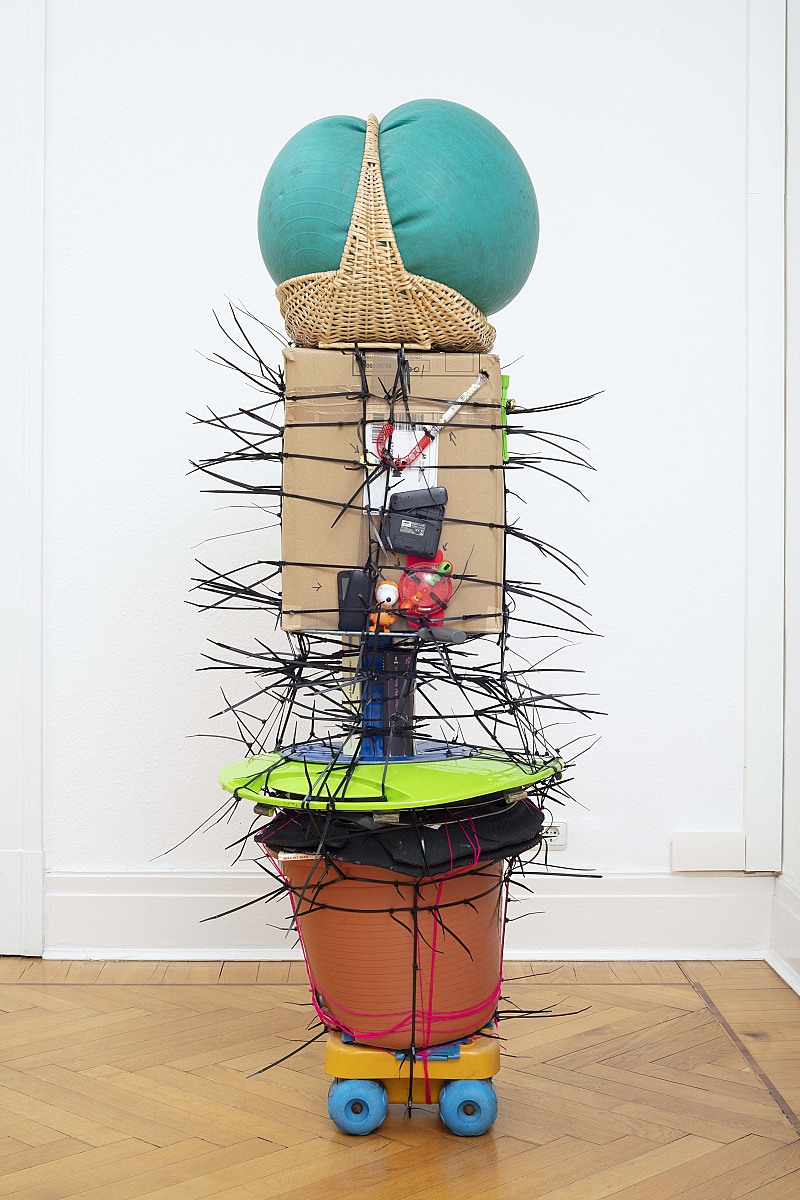
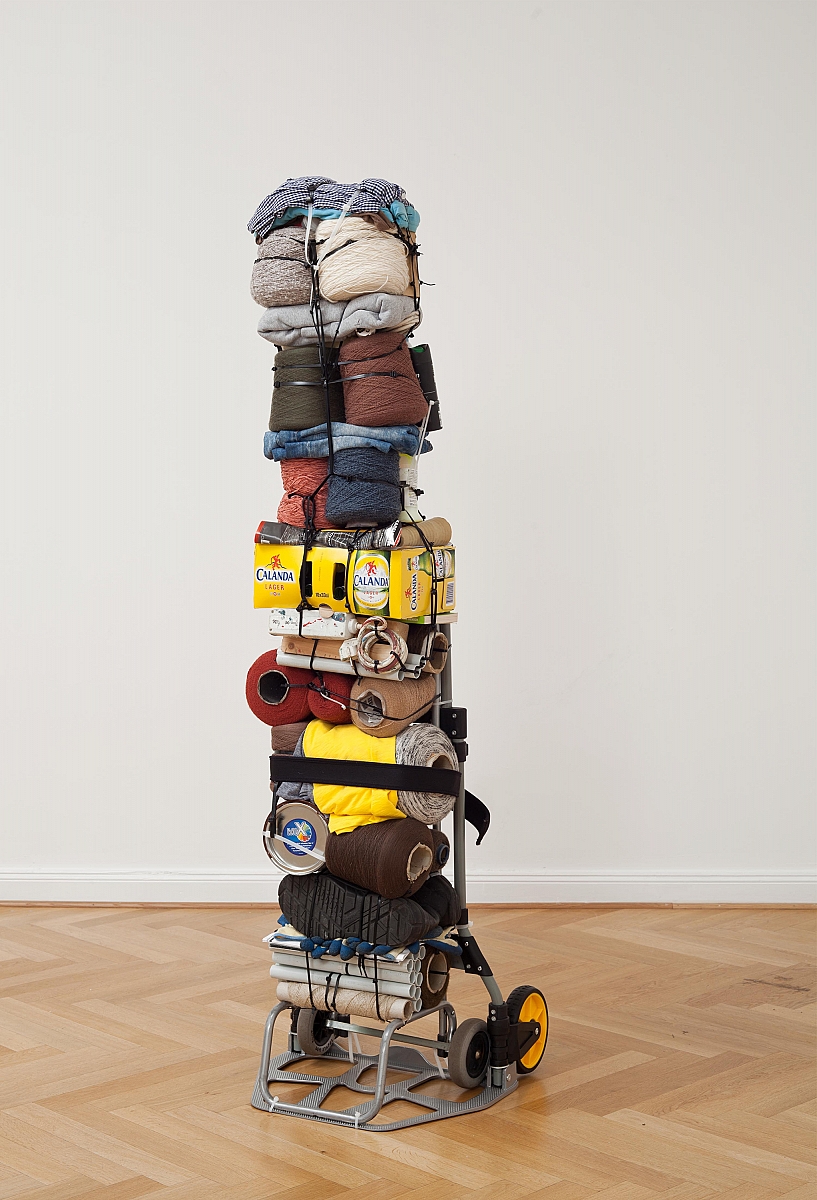


Umut Yasat’s (b. 1988; Germany) name is inseparable from his main project, an ongoing work-in-progress known as ‘Der Stapel’, which he started in 2014. ‘Der Stapel’ are configured by the agglomeration of materials that somehow become part of the artist’s life: trivia and meaningful objects are compressed until they reach the artist’s height, configuring a way to visualize time — Yasat’s and our own, given the presence of everyday objects that populate our world. To him they present a way to visualise time, his experience as immigrant and the question of cultural identity at large, a development of ideas concerning time and progress, mortality, identity and banality.
Yasat’s project has been featured in numerous institutional solo and group exhibitions at Museum der bildenden Künste, Leipzig; Kunstverein Trier; Kunstmuseum Heidenheim; Kunsthalle Recklinghausen; Museum Arnhem; Kunstverein Freiburg; Kunstverein Reutlingen among others.
Between 2009 and 2015 he studied in the Staatliche Akademie der Bildenden Künste in Karlsruhe with Gustav Kluge, Jonas Burgert and Marcel van Eeden.
He currently lives and works in Berlin.